
Introduction
Web applications and digital services are present today where APIs (Application Programming Interfaces) are greatly essential for connecting systems, sharing data, and supporting user experiences. The emergence of public and private APIs has exponentially increased the traffic. Well, this connectivity calls upon innovation but again gives a headache for the server load handling. One of the well-accepted solutions to this challenge is the implementation of API rate limiting, which serves as a throttle to ensure that no one user or application monopolizes the system with an avalanche of requests, sustaining equitable service, robustness, and security for all the users mentioned above.
To rate-limit APIs means to protect, and in protecting, it means preventing DoS attacks, shielding sensitive operations from abuse, and maintaining predictable performance for backend services. Without rate limits, an API can be overwhelmed with traffic and thus subject to server crashes and slow response times, and too much unsolicited traffic can even crash an entire system. Therefore it is critical that any developer, system administrator, or business that relies on scalable Web services understands everything about rate limiting: how it works, the consideration for using it, and how to communicate effectively to stakeholders about its role. This article discusses API rate limits as a means of protecting server resources, detailing the how, why, and implications of this essential concept.
Understanding the Fundamentals of API Rate Limiting
What Is API Rate Limiting?
API rate limiting allows for the control of the number of requests an API user or client may send during a specified period. This ensures the performance and reliability of server resources. Without some limits, these could be challenged when a flood of requests from a single source-intentional or not-might drain the computer memory and bandwidth. So, you have the related cap of 1000 requests/ hour against which fair resource usage can be established; it should be reasonable and not flood the servers neither prohibiting anyone from rendering a quality service. These identifiers-such as headers and status codes in an HTTP protocol, as well as throttling algorithms rejecting overquota requests-can pretty much address anything.
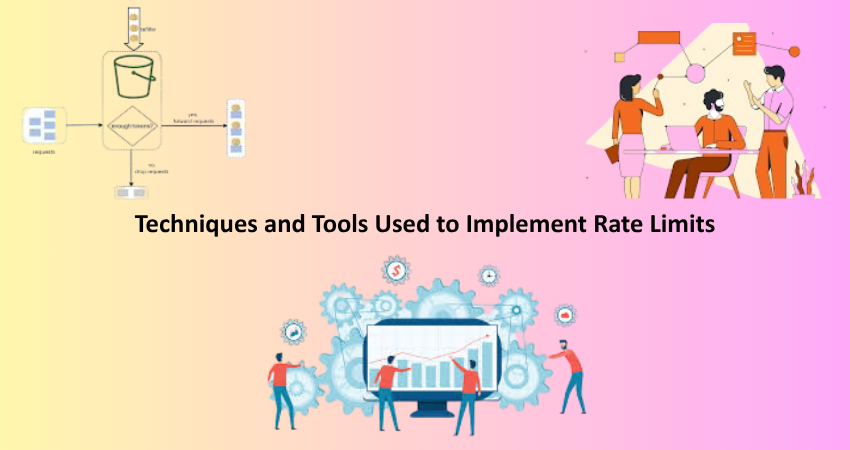
This is one of the most widely used rate limiting algorithms called “token bucket”. It allows bursts of requests for a short duration with a steady maximum request rate for longer periods. Other methods include “leaky bucket”, “fixed window”, and “sliding window log” techniques, each with a wide variety of cases and nuances. They can be implemented at various layers: API gateways, load balancers, and server-side codes. The decision about whether to apply and how to best enforce rate limits depends on contrasting sets of architectural needs and the degree of sensitivity of API endpoints. In general, managing API access in this manner helps organizations maintain their system from degrading while also ensuring a smooth user experience.
Why Are Rate Limits Critical for Server Health?
Impose limits on the number of requests that can be made to an API end-point, as such limits are healthy for servers in the sense that they reduce the possibilities of severe server failure and deprivation in server performance due to stress from unmoderated traffic. APIs are therefore doors to backend infrastructures, which can be databases, file storage, or even a third-party service. When API calls scan unrestricted and ascend into the masses, all these systems succumb to bottlenecks. This leads to an increase in response times, reduced uptime, and in worst scenarios, crashing the service in whole for all users. This sets limits on the number of requests that a user can send within a specific period in time, allowing the server to receive some breathing room for concurrent handling of operations in some even flow of workload distribution, maintaining system stability on different traffic loads.
Moreover, rate limiting is programmed for proactive defense against malicious activities such as brute force attacks and API scraping. Attackers usually inundate endpoints with requests to compromise unauthorized entry or to glean information. Rate limit immediately prevents such behavior acting as the first line of defense without requiring deep packet inspection or sophisticated firewall rules. This is extremely useful for institutions that operate in non-negotiable business environments such as banking, e-commerce, or health care. Resource consumption is optimized while giving an ‘always-on’ guarantee service reliability with intelligent rate limits managing API traffic. Organizations can ensure available services through optimized resource consumption while providing a consistent user experience across the board.
How Rate Limits Enhance Security and Abuse Prevention

Blocking Malicious Traffic Patterns
API rate limiting is a very strong method of defense because it detects and blocks unusual traffic patterns. Excessive request spikes on the part of an IP address or user can be generally termed as abuse. Anything of this nature would be a DDoS attack, a sort of credential stuffing, or any attempt using brute-force techniques to compromise a vulnerability. Thus, with rate limits, servers are able to identify such patterns and block them before any damage is inflicted. Rate limits frequently respond with HTTP 429 status code (“Too Many Requests”). This response means that the requester needs to slow down. Frustrating environments such as these are not conducive to the quick-request cycles that automated tools favor, creating a barrier for would-be criminals.
Conditions for rate limiting may also be dynamically set depending on the user’s role and behavior. For instance, a new user might often be allowed 100 requests per hour, while an authenticated business partner can be permitted anywhere from one to ten thousand requests. This tiered approach ensures that cost-justified users get sufficiency in accessing functions while risky actors get throttled automatically. Some go further to include anomaly detection engines integrated with real-time speed modifications based on behavior under a mixture of static machine learning rules. Collectively, these techniques increase the ability of the server to withstand attacks, decrease false positives, and protect sensitive data without human intervention or disruption of services being available.
Preventing API Key Misuse and Data Scraping
API’s unique keys are there to identify the calling application or user. These keys, however, can be stolen, shared, or abused. Rate limiting acts as a gatekeeper-no evil repercussions when an api-key compromise. For example, a developer can accidentally post his/her API key on GitHub, and nefarious people can access that API and collect a huge amount of data illegally. However, with rate limiting, any sudden increase in activity may trigger throttling even before notifying the administrator. This can prove disastrous in case the credential leak is exposed. Financial losses and operational impacts due to these credential leaks can be reduced greatly.
In addition, for industries like stock APIs, property listings, or medical databases that deal in the currency of data monetization, the scraping of high-value content will invariably cost revenue. Rate limits set a natural boundary which will usually prevent large-scale scraping. When combined with OAuth and IP whitelisting, rate limits complete the security approach. Ultimately, this guarantees that all access to business-critical information is always controlled, monitored, and indeed protected. The other way that rate limits protect infrastructure safety is that they also ensure the business value of proprietary data and services is preserved.
Resource Allocation and Cost Control through Rate Limiting
Balancing Server Load Across Multiple Clients
One of the main positives of rate limiting on an API is that it allows server load to be balanced across many clients. Without limiting access, some users could monopolize the resources of a server, harming the performance seen by others. This becomes important in shared contexts in which APIs are called from a variety of applications having different usage patterns. Setting rate limits in support of fair use is one way organizations can ensure that all users receive the expected level of service without one client displacing the others. This balance keeps the system stable with heavy usage and permits a consistent quality of service.
Load balancing becomes much more important for traffic handling, such as when there is increased activity during peak hours or new product launches when suddenly high volumes of requests were experienced in comparison with “normal” periods. For instance, a rate limiter would enforce a different priority set to key clients, thereby reducing congestion while giving a server room to take care of its other operations such as background processing and database queries. Some companies implement ‘soft limits’ where customers are warned before being throttled; thereby enabling them to adjust their usage without experiencing sudden interruptions to a service. High-availability systems extremely need this requirement in order to keep uptime levels constant and performance degradation low to prevent impacts on business operations or customer trust.
Reducing Infrastructure Costs by Managing Demand
Interestingly, rate limiting also contributes to cost management. Cloud infrastructure often charges on the basis of usage: CPU cycles, memory, bandwidth, and storage. A public API, if left uncapped, would let loose requests in a flood, necessitating provisioning of servers and leaving behind excess bills. In this way, rate limits can be set and enforced, allowing companies to avoid an over the top infrastructure footprint and scale such that it becomes strategic. This development ties increased traffic growth with the value instead of just costs. An example: A company has a freemium API and gives paying consumers higher limits in their plan to induce some upgrades but keeps the free tier cost-efficient.
In addition to saving on infrastructure costs, the other important area where rate limiting helps is in controlling costs owed to the third party. Many applications interact with some external APIs, which have separate limits and pricing on those limits. Internal users or clients might trigger those APIs quite reckless, and that can balloon the costs. Internal rate limiting is employed so that these calls can be made in a measured and optimized way. Some enterprises even leverage rate limiting as a metric for billing: Clients would be charged for the number of API calls made, and any overages would be charged at a premium. Now this makes rate limits not just a protective measure but a monetization and growth strategy employed in business.
Techniques and Tools Used to Implement Rate Limits
Common Algorithms for Enforcing Limits
Numerous standard algorithmic implementations exist for API rate limiting, each having an emphasis on certain traffic behaviors, as well as differing scalability requirements. In simple terms, the fixed-window method is based on a count of the number of requests over time-bucket, say 100 in one minute. Although simple, it is not suitable for handling burst traffic which occurs almost at the edge of the time window. The sliding window algorithm remodels this with averaging requests across overlapping intervals thus providing more consistent control. On the other hand, the token bucket and leaky bucket algorithms really come into play for higher sophistication, offering burst tolerance while smoothing traffic over time. These algorithms work well in highly scalable environments, requiring flexibility and fairness.
There are trade-offs associated with each of these algorithms. Fixed windows are easy but blunt; token buckets are much more precise but computationally expensive. The algorithm remedy should be driven by the goals of the API-whether it must focus on security-related, performance-related, fairness-related, or monetization-related objectives. Implementation usually occurs at the level of API gateway using such tools as NGINX, Envoy, Kong, or commercial solutions such as AWS API Gateway and Azure API Management. These tools provide ready-made rate-limiting policies that fit well with authentication systems for logging and monitoring. Developers must take into account the complexity of algorithm versus business impact, making it consistent with the overall API design and expectation in traffic.
Monitoring, Logging, and Real-Time Analytics
Rate limiting does not end at barricading entry; it continues to verification and analysis. Logging for rate-limited requests provides observable behavior to mark attempts of abuse and tune settings, such as real-time visualization of traffic metrics with tools such as Prometheus, Grafana, and Datadog or even the ELK Stack. Appropriate in this instance for the developers to view traffic spikes and identify hereto-abused rates of API consumption. Moreover, this more granular detection would set off alarms for an administrator to take prompt action on any suspected incursion that brings the client nearing a threshold, as opposed to waiting until this develops into an outage or data breach.
The rate-limit analysis can help in making business decisions. When a ton of users keep hitting up rate limits over the months, it probably means scaling the infrastructure or coming up with new premium tiers. Unusable quotas could mean way too much has been allocated in this instance or that the product does not fit its users’ needs. In the long run, the resulting feedback loop of monitoring and optimizing creates a more effective API ecosystem, one that is focused on users. It transforms rate limits from a traffic cop to a source of actionable intelligence. These strategic advantages not only strengthen the operational and technical nature of the business, but also make rate limits a key component in sustainable growth.
Conclusion
API rate limiting is much more than being a mere speed bump-style technicality; it is one of the most basic tools to ensure server resources usage optimization, performance, and building a scalable digital experience. Practically implementing request volume cap between the limits will spare the infrastructure from over routing, security place, ensure fairness, and continue to work operating costs in mitigation. They are customarily associated with any serious API strategy: especially nowadays when everything is so data driven, rampant are web traffic spikes, user demands, and malicious attacks. A company with some intelligent and flexible rate-limiting policies thus has everything to gain from sustainable growth while serving each customer from its better-built service.
Rate limiting offers various techniques and is greatly beneficial, ranging from the simple basic fixed window to advanced token bucket algorithms and from automated analytics to tiered access models. When properly configured, the user remains completely unaware of any rate-limiting process, which gains a lot of weight in the backend. Be it a public API for developers, interaction with external services, or maintenance of a complex enterprise ecosystem, learning and working with API rate limits will empower you to protect your underlying infrastructure, manage your costs, and confidently serve your customers.